Posts

Speed Up Internet Explorer Load Time

Image
Here's a quick tip for those of you that always find yourself anxiously waiting for Internet Explorer to start up.  Don't wait for it - use Chrome!   It is a faster browser.  With that said, I am actually going to help you improve IE's boot up time. Launch Internet Explorer. Go to the 'Internet Options' menu (Alt+T -> O). Click the 'Programs' tab. Click 'Manage add-ons' There will be a list of various toolbars, extensions, etc. that are add-ons to Internet Explorer.  You may need to scroll horizontally, but there will be a column labelled 'Load time'. Click that column header to sort by load time. Now you know which add-ons are causing the most delay and you can disable them if they're not important to you. A few words of caution though:  Be careful that you don't disable antivirus plugins unless you're certain it's ok. If you've any question, problem, suggestion and feedback than please comment...
Narrowing the Spotlight: Tricks to Apple's Search Tool

Image
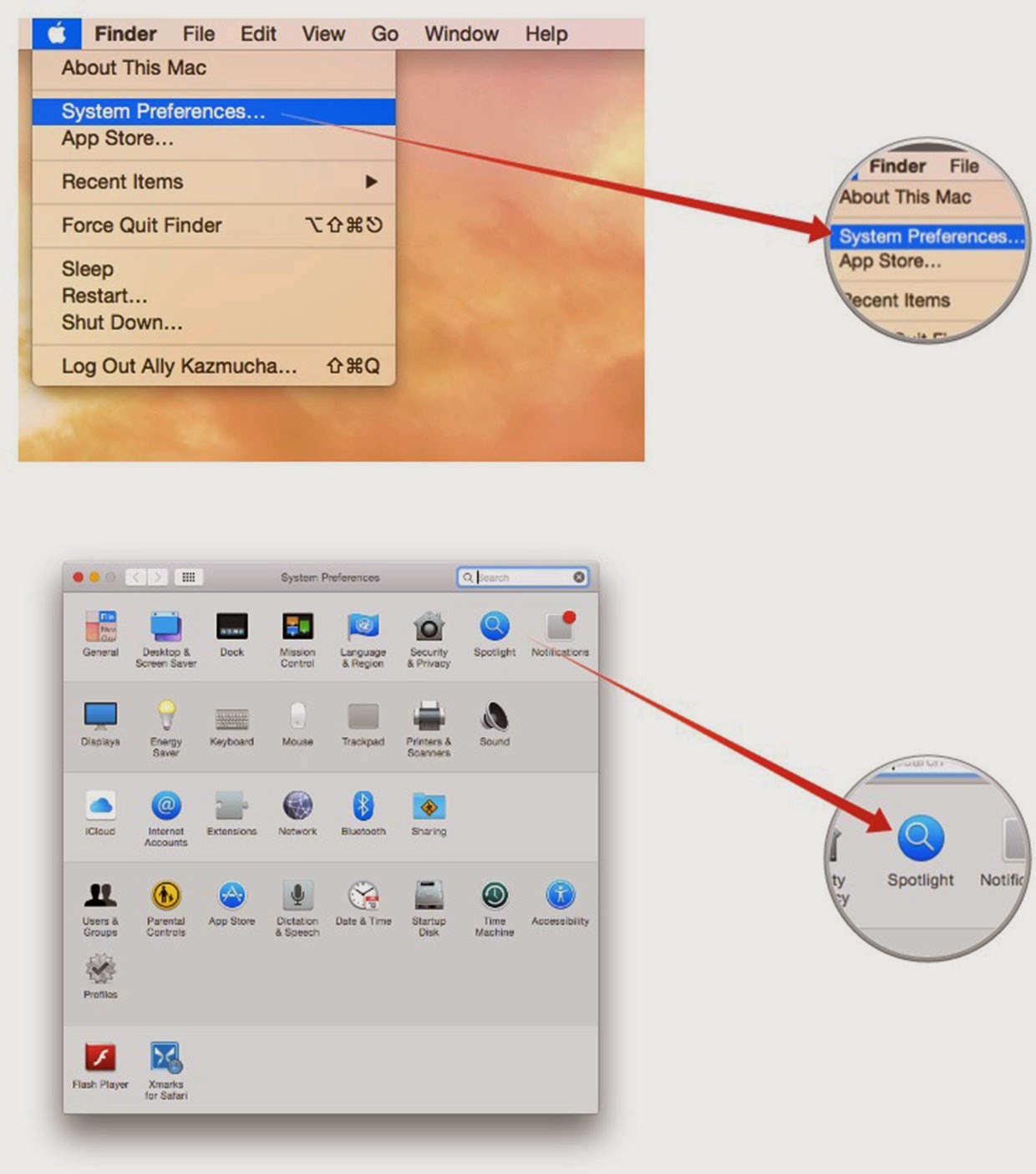
Apple has all kinds of little tricks built into their operating system that can make users’ computer experience much more efficient and smooth. However, many of these features are often unknown to new as well as old Mac users, or are understood only in their fundamental parts. Spotlight is one of those things. It can be used intuitively to make simple searches even by someone totally new to OS X, although there are also slightly more in depth methods of using it, by utilizing specific file attributes, that turn it into a powerful and awesome search tool. When you simply type in the name of something you are looking for, Spotlight will not only list all the files that contain that word in their name, but also any file that contains that word within the actual document. For example, if you were to type in “vacation,” any file with that word in the name or within the contents anywhere will show up, rendering a rather cluttered list of results. To avoid this, you can type in “nam...

Personalized Efficiency: The OS X Dock

Image
The Dock in OS X is a gem of programming and design that serves several functions. It acts as a sort of home base for launching and controlling applications as well as storing and accessing folders and files. The Dock is also fully customizable to a particular user’s needs. This article will examine the functions of the OS X Dock and go over the various ways users can tailor it to match their vision of a perfect computing experience. When scrolling the pointer over anything on the Dock, a little word bubble will appear showing the name of that item. One of the simplest and most apparent functions of the dock is to open applications, which can be done with a single click of whatever icon the pointer hovers over. By right clicking an icon in the Dock, the computer will instead bring up a menu in which information and options for that application can be found. Also of note, users can hold down command while clicking an item in the Dock to go to the original item in Finder. Ce...

Keyboard Troubleshooting

Image
If you begin to experience problems with your keyboard not working or some of the keys not responding, the first thing you should try is to Press CTRL+ALT+DEL (all at the same time). Depending on what version of Windows you have, you should get the Task List. In Windows 7 you may be given a list with the last option being Start Task Manager and that is the one you select.  A box will pop up that says Windows Task Manager. In the image above, you will see a list of all tasks currently running including this tutorial being created called “Keyboard Troubleshooting”. On the right hand side you will see in the title bar, the word “Status”. Under the Status column it indicates which programs are running as shown in the below image. Not the case for the example above, but on your computer check for any programs that say “Not Responding” and select the first one with a “Not Responding” status. Next, click the End Task button on the bottom of the pop-up box as shown here:...

How to Access Common Programs and Recently Used Files in Windows 7

Image
If you’re used to Windows XP or Vista, you’ve probably come across the Quick Launch toolbar, a small section of your taskbar where you can add shortcuts to your favorite programs. In Windows 7, however, the Quick Launch feature is conspicuously absent.  Where exactly did it go? In fact, it’s right in front of your eyes.  The whole taskbar in Windows 7 serves as one big “Quick Launch” area, thanks to the introduction of Jump Lists.  Jump Lists associate your recent files with the programs that were used to create them, giving you easier and faster access than ever before.  This tutorial will show you how to pin your favorite programs to the taskbar and easily select the recent files you want to open. To pin a program to your taskbar: _________________________________________________________________________ Click the Start button and navigate to the shortcut for the program you want.  Right-click on the program title and then click “Pin to Task...

Changing Your Keyboard Language Setting

Image
You can change the input language of your keyboard on virtually every operating system out there, but the procedure can be a little hard to figure out. You can change the language you use to type things in to the computer and the visual interface language, of course, but we'll be talking specifically about the input language today. Add or Remove Keyboard Input Language _________________________________________________________________________ All of the settings you need to change your keyboard's input language are located in the Region and Language window. To find it, do one of the following: Open the Control Panel, click over to Clock, Language and Region, click on Region and Language, click on Keyboards and Languages OR click on Change keyboards and other input methods Search for "change keyboard" using the search option in the Start Menu, click on Change keyboards and other input methods Once you've located the option, you're ready to ...

Crazy Frog Racer 2 PC Game Free Download

Image
 The most played Android game is now for your pc. Crazy Frog Racer 2 pc Game Free Download. just download and enjoy. Windows Xp,7,Vista,8 Ram: 512 MB Cpu: 1.2 Ghz HDD Space: 85 MB Size: 57.1 MB If you've any question, problem, suggestion and feedback than please comment below. Have a nice day!